A framework for identifying and governing valuable intangible assets, testing dependencies and turning an incomplete financial picture into more informed management decisions.
Explores how to preserve valuable working methods through secrecy, processes and knowledge transfer, starting with the source of advantage before choosing protection.
An interview-format explanation of the fractional CIAO role, showing how executive responsibility can connect IP, data, people and relationships with business decisions.
18 min read
The complete collection
Follow your curiosity.
Explore by topic, audience or newsletter. Articles are listed from newest to oldest.
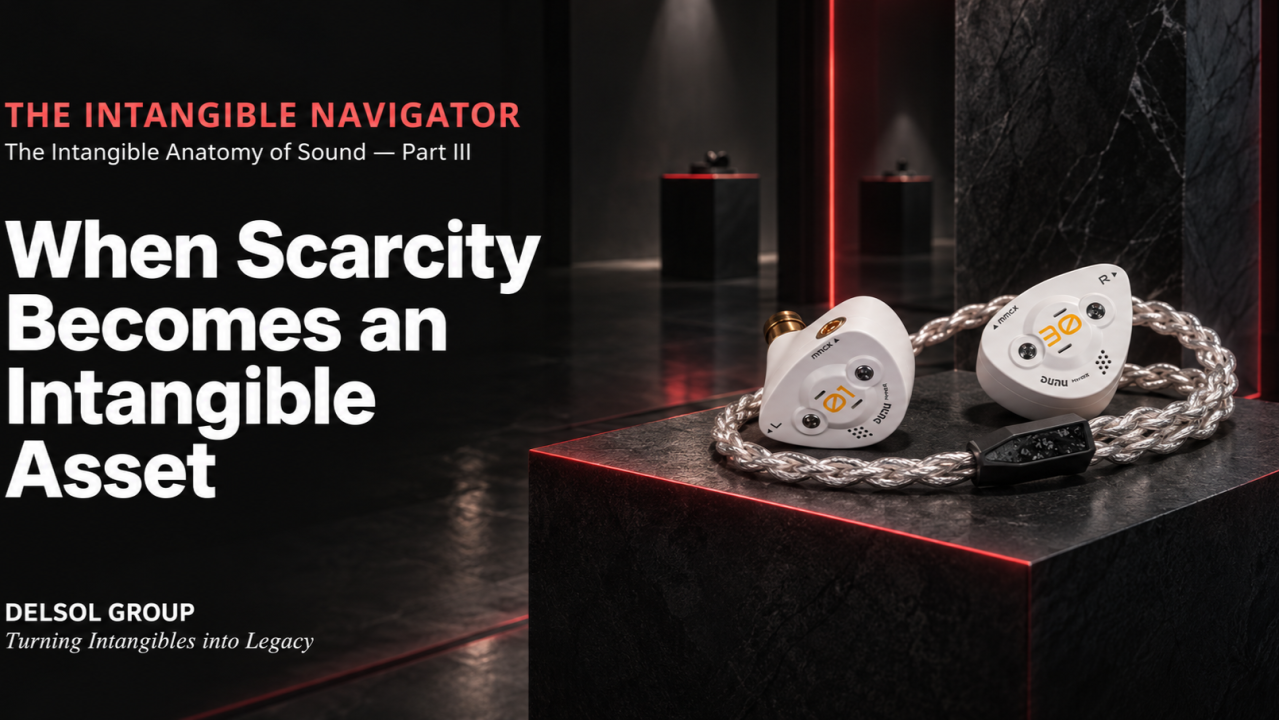
How limited editions amplify brand, reputation and collaboration value, using high-end audio to explain why scarcity creates meaning only when supported by substantive intangible assets.
A high-end audio case study shows how patents, trade secrets, contracts and brand reputation combine to protect competitive advantage and guide decisions about disclosure.
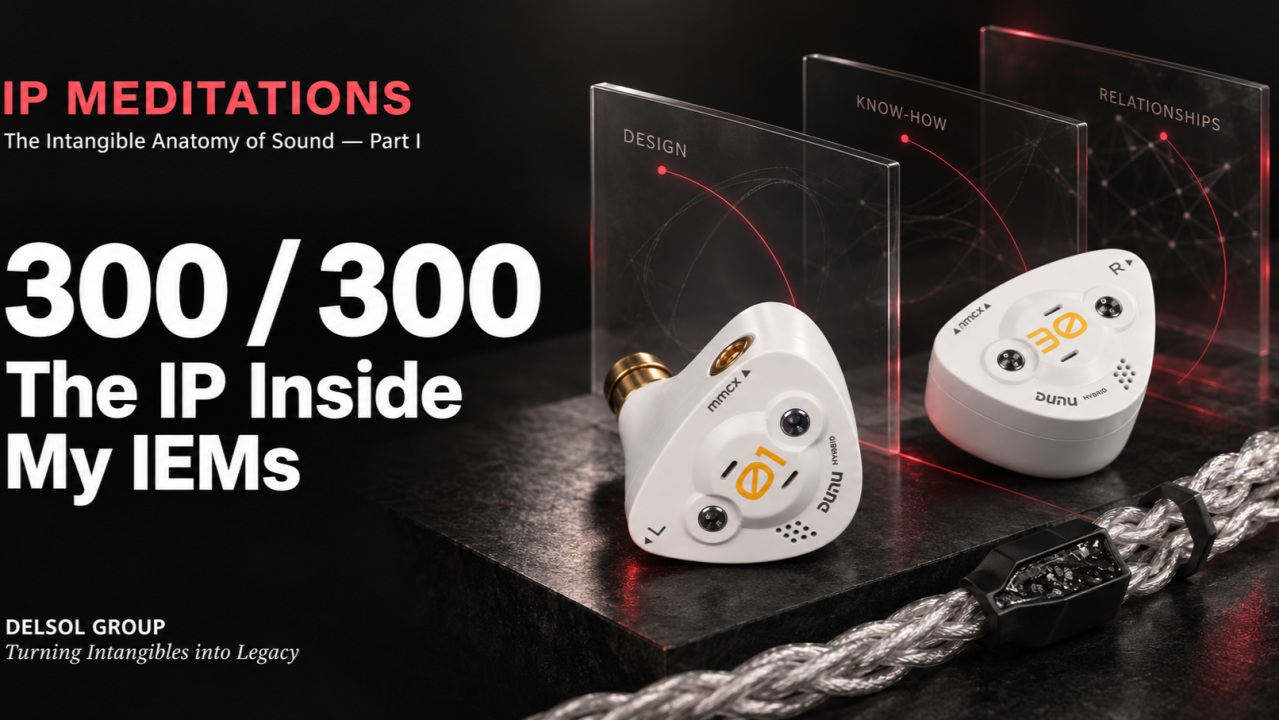
An examination of limited-edition earphones reveals the patents, know-how, design, trademarks and collaboration agreements that collectively create a product’s technical differentiation and commercial value.
How organisations turn AI outputs into useful intangible assets through human contributions, validation, permissions, reproducible processes and leadership that connects knowledge with long-term value.
Why quantum strategy depends on sustained access, resilient relationships and controlled dependencies, with practical boardroom scenarios for preserving technological capabilities and future commercial choices.
A practical approach inspired by Marcus Aurelius to separate strategic narratives from evidence, examine intangible assets and improve leadership decisions without demanding certainty before action.
How quantum ecosystems turn relationships, shared knowledge and trust into strategic capital, with practical ways to capture insights and translate connections into action.
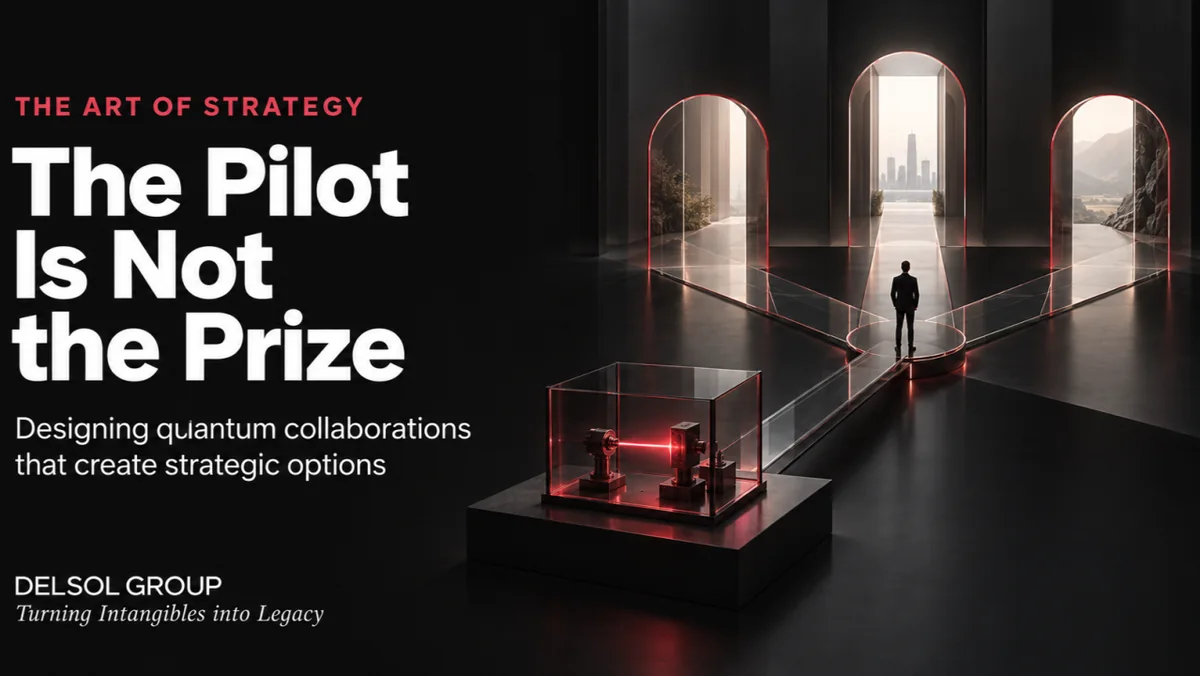
How to structure quantum pilots around evidence, ownership, confidentiality and commercial options, protecting both partners while creating a credible path from experimentation to growth.
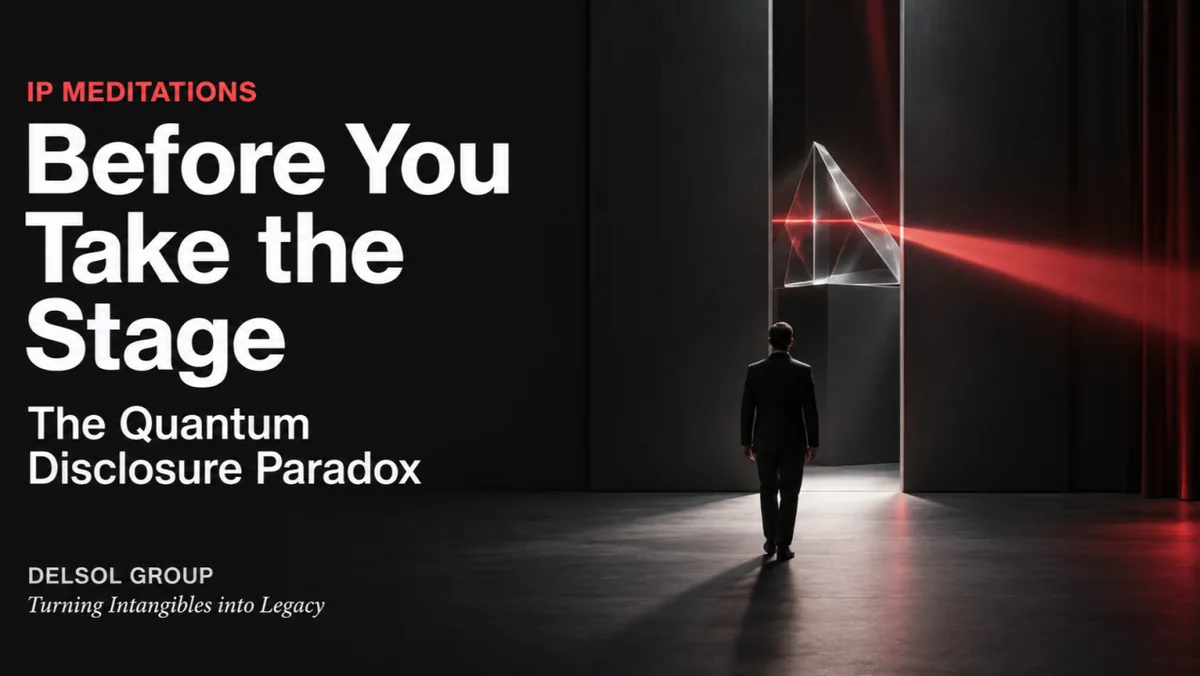
Helps quantum founders plan external conversations through public, controlled and secret disclosure zones, balancing credibility with protection of the knowledge that matters.
A framework for identifying and governing valuable intangible assets, testing dependencies and turning an incomplete financial picture into more informed management decisions.
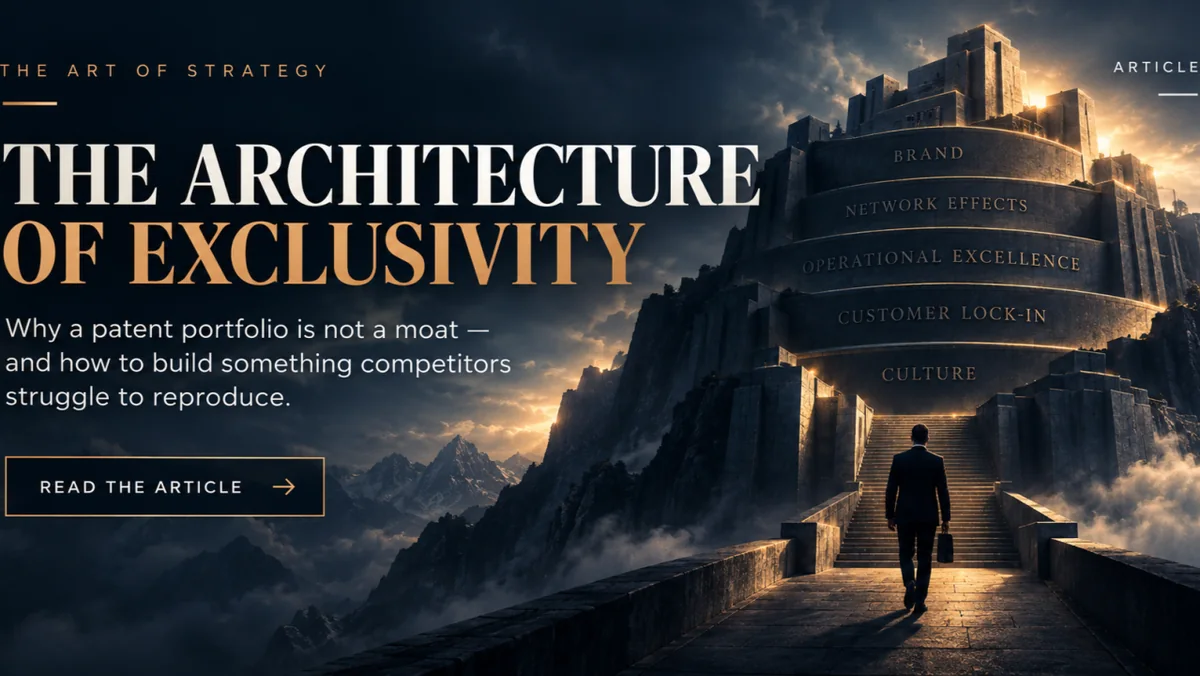
Explains six layers of exclusivity, connecting legal rights, confidential knowledge, execution, contracts, brand trust and ecosystems into a defensible competitive position.
Explores how to preserve valuable working methods through secrecy, processes and knowledge transfer, starting with the source of advantage before choosing protection.
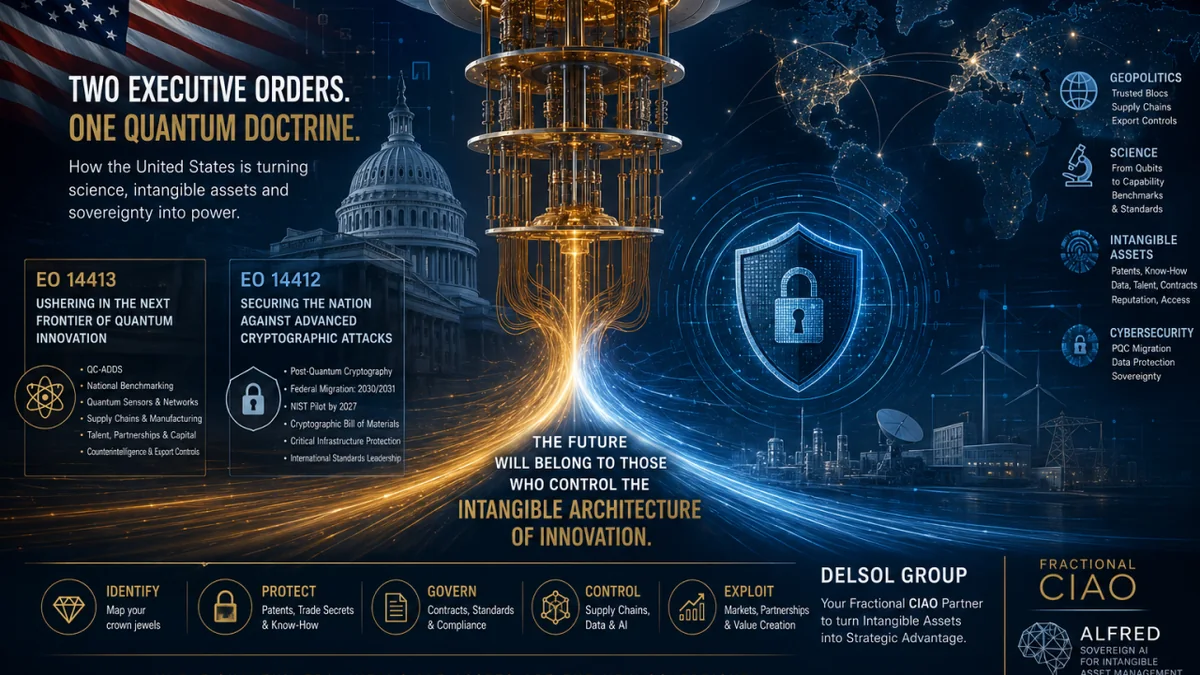
Reads two US executive orders through quantum industrial strategy and cryptographic migration, exploring implications for standards, supply chains, partnerships and intangible assets.
Examines why European innovation can lose economic value through fragmented ownership, dependencies and governance, and proposes more deliberate control of intangible assets.
An interview-format explanation of the fractional CIAO role, showing how executive responsibility can connect IP, data, people and relationships with business decisions.
Lessons from France Quantum and VivaTech inform five board priorities for mapping intangible assets, assigning responsibility and controlling knowledge, ownership and dependencies.
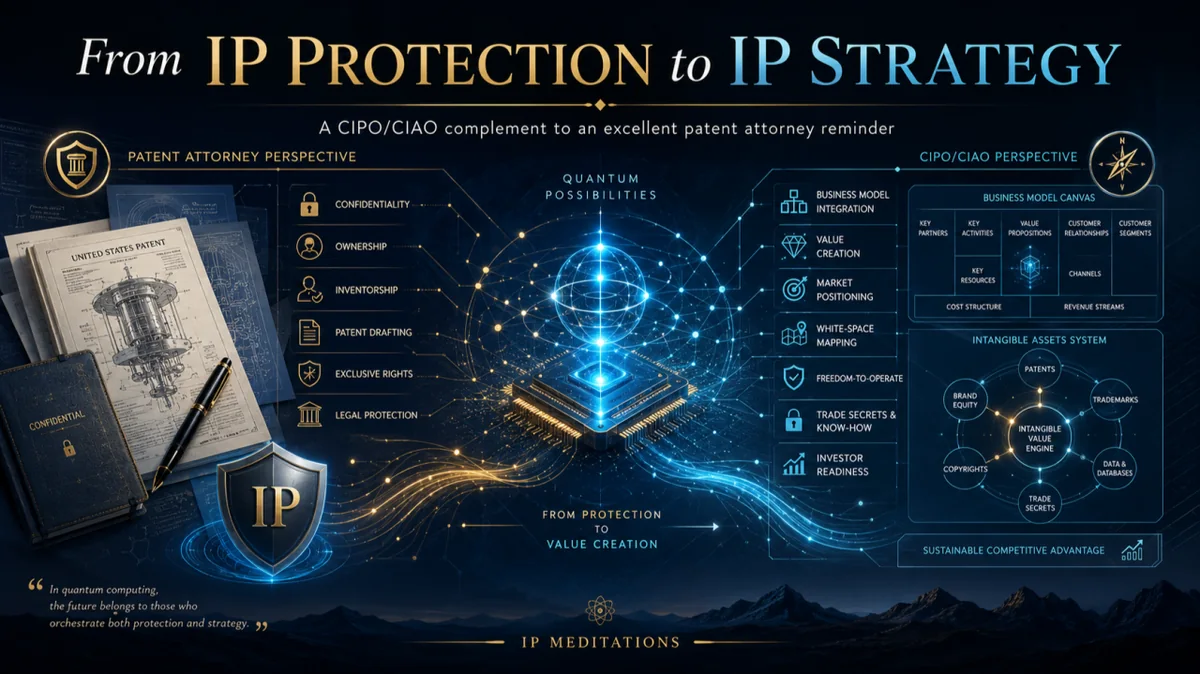
Encourages quantum founders to begin IP strategy with their business model, then connect market positioning, secrecy, freedom to operate and investor readiness.
Examines trade-secret exposure in AI workflows and presents DELSOL's approach to local AI, controlled access and the governance of confidential knowledge.
Maps the intangible assets behind quantum platforms, connecting interfaces, data, contracts, know-how and trust to value capture and defensible market positions.
Examines Canada's intangible-asset challenges, connecting productivity, IP ownership, financing and commercialisation with practical priorities for organisations, investors and policymakers.
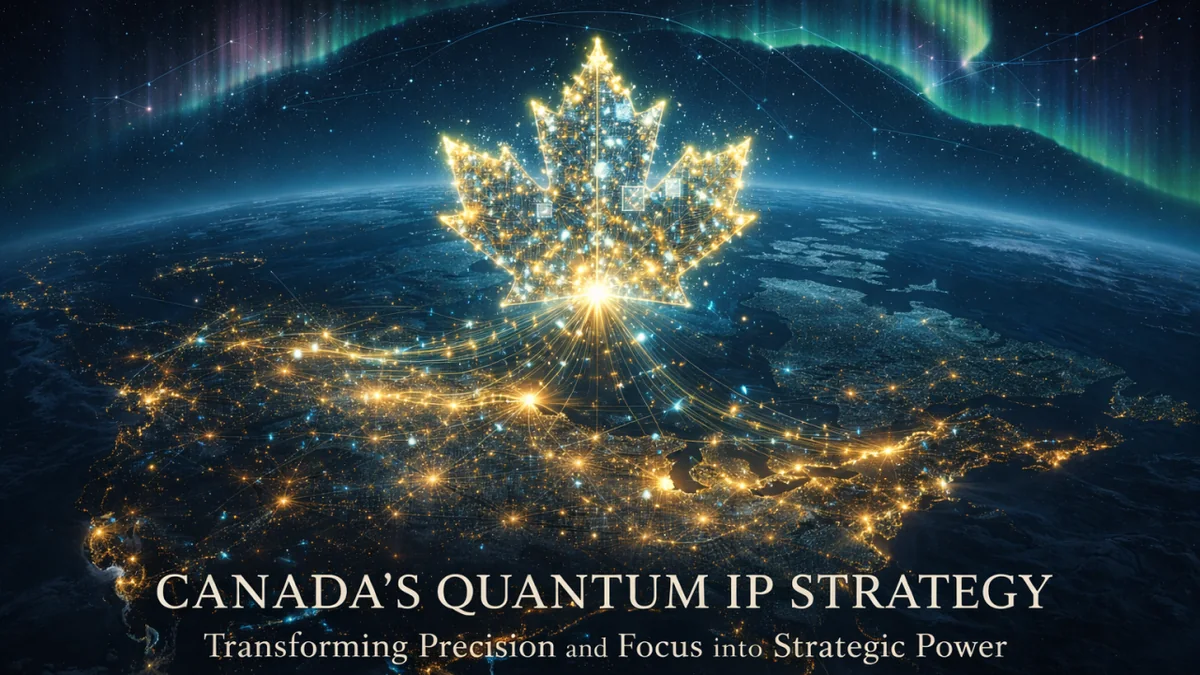
A strategic reading of Canada's quantum position, with recommendations on IP ownership, scale-up funding, technology transfer and selective competitive strength.
Uses acquisition examples and a Stoic framework to encourage a new-year review of intangible ownership, dependencies and the assets a business can control.
Examines Canada's focused quantum ecosystem and the opportunities and dependencies that arise when specialist expertise competes with larger national programmes.
Explores Europe's intangible economy and proposes a framework for visibility, protection, monetisation and board oversight amid accounting and financing constraints.
Maps Europe's quantum strengths and structural gaps, with scenarios and actions for aligning IP ownership, funding and commercialisation across companies and institutions.
Reflects on the gap between European quantum research and control of its results, connecting fragmentation, capital and institutional coordination to strategic autonomy.
Compares Chinese and US approaches to intangible assets, connecting national policy, company management and investment choices in the knowledge economy.
Analyses how China's coordinated quantum investment and patent activity may translate into influence, alongside vulnerabilities and implications for international stakeholders.
Reflects on China's quantum ambitions through scale, continuity and knowledge control, inviting readers to consider the relationship between patent volume and influence.
Presents the author's perspective on women founders and intangible value, with reflections on trust, relationships and long-term leadership for entrepreneurs and investors.
Examines the US quantum model through coordinated research, corporate IP, capital and governance, drawing strategic lessons for organisations seeking durable influence.
Reflects on American quantum leadership through the interaction of research, industry and capital, with lessons about patent quality and ecosystem design.
Surveys national quantum IP approaches and draws strategic lessons about ownership, industrial positioning and the conversion of scientific knowledge into influence.
Reflects on national quantum IP patterns and the relationship between knowledge ownership, technological dependence and sovereignty across the global innovation landscape.
Uses the io acquisition to explore intangible value and the executive responsibility for connecting knowledge, protection, business strategy and investment narratives.
A counterfactual exploration of a world without IP, inviting reflection on secrecy, creative incentives, collaboration and the structures that support innovation.
Explains the fractional CIPO role and how executive IP leadership can connect protection, commercial priorities and cross-functional decisions as a company grows.
Uses examples of IP success and failure to examine licensing, trademarks, trade secrets and the importance of aligning protection with business decisions.
Examines IP and intangibles as business infrastructure, connecting AI, organisational culture and human capabilities with the way companies create and retain value.
Explores identity as a source of luxury value, connecting authenticity, reputation, craftsmanship and heritage with the strategic management of intangible assets.
A quantum IP playbook examines protection choices, portfolio design, collaboration and conflict preparedness to align technical innovation with long-term business value.
Connects IP education with Stoic wisdom, discipline and justice, encouraging innovators and executives to develop strategic understanding alongside legal knowledge.
Examines how AI changes intangible-asset creation and management, from augmenting human creativity to raising new questions about ownership and business value.
Presents a quantum IP scorecard covering portfolio strength, innovation, market positioning, financial contribution and operational efficiency to inform strategic reviews.
Explores how creativity, trust, relationships and culture sustain intangible assets, connecting human behaviour with leadership and organisational value.
Sets out an IP operating framework for quantum companies, covering invention capture, collaboration, freedom to operate, commercialisation and staff education.
Introduces HMS DELSOL's human-centred approach to intangible assets, linking leadership, organisational behaviour and IP management to strategic development.
Applies IP Design to quantum R&D, showing how early protection choices, cross-functional teams and portfolio planning can support innovation and market relevance.
Uses Stoic thinking to reframe disputes, competitive threats and market disruption as opportunities to reassess IP choices and strengthen business priorities.
Examines potential quantum IP conflicts and outlines ways to prepare through risk assessment, clearer collaboration arrangements, open innovation and patent pools.
Applies Stoic principles to IP leadership, exploring rational decisions, ethical judgement and a steady response to disputes, setbacks and uncertainty.
Introduces The Intangible Navigator and the CIAO role, framing people, relationships and intellectual assets as interconnected drivers of organisational value.
Introduces IP Meditations and its philosophical approach to leadership, resilience and ethical decision-making in business, innovation and IP strategy.
Explores how relationships, IP and collaboration create the conditions for ideas to develop, with practical suggestions for building and maintaining an innovation network.
Draws on an IP pitching workshop to help practitioners translate technical or legal proposals into clear, relevant messages for executive decision-makers.
Explains patent-pool structures, benefits and governance, with particular attention to quantum companies seeking simpler licensing and collaborative routes to market.
A five-step IP Design framework connects business objectives, ecosystem mapping, ideation, validation and implementation to commercially relevant intellectual assets.
A personal account of QAI Ventures' role in quantum entrepreneurship, highlighting its accelerator, investment activity and the people connecting a growing ecosystem.
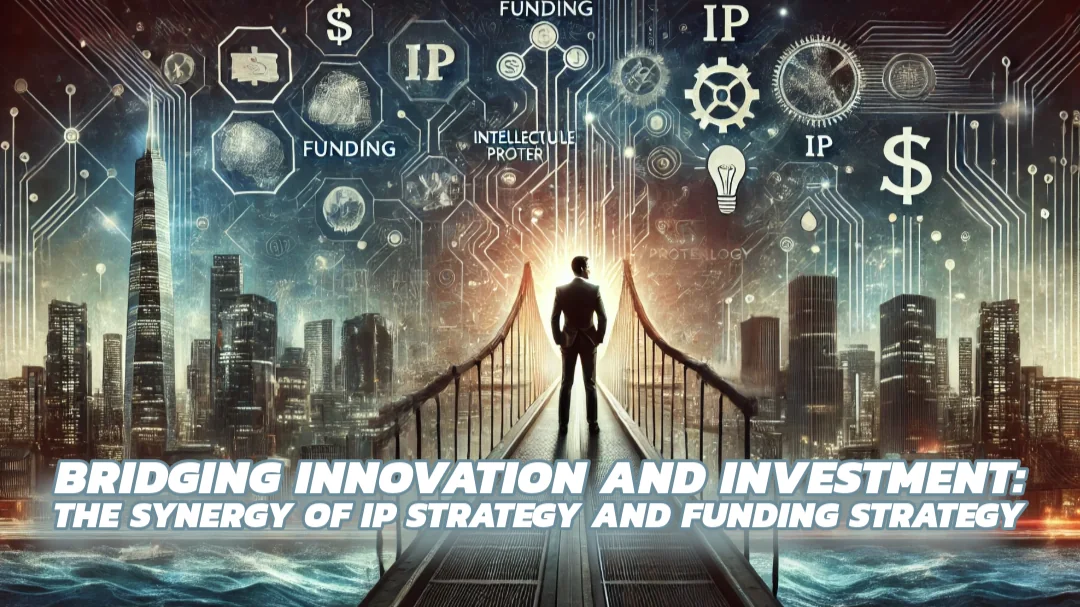
Connects deeptech funding milestones with IP decisions, showing how financial planning and protection choices can support development, credibility and competitive advantage.
Explains the fractional CIPO's role across the IP lifecycle, from invention capture and portfolio choices to commercialisation, partnerships and investment decisions.
Reflects on lessons associated with different life stages, from childhood curiosity to later-life perspective, and their application to personal and professional growth.
A report from Montreal and Sherbrooke exploring how science, business culture, legal expertise and cross-border relationships shape Quebec's innovation environment.
Twenty questions help leaders and investors examine IP threats, alternatives, budgets and business alignment before judging the strength of a company's position.
Applies Tai Chi principles to IP management, emphasising strategic alignment, cross-functional coordination, adaptability and the patient development of organisational resilience.
Adapts IP-focused due diligence for executives, linking asset assessment, risk, revenue and organisational responsibility to growth and strategic decision-making.
Explains the interdependence of business, innovation and IP, helping leaders connect commercial objectives with the creation and protection of new value.
Connects digital transformation with deeptechisation, examining how IP management must adapt as companies integrate increasingly complex scientific technologies.
Uses alchemy as a metaphor for converting ideas into economic value, highlighting IP management, continuous innovation and alignment with business strategy.
Explores how films and television depict intellectual property, offering accessible entry points for conversations about innovation, ownership and IP awareness.
Sets out an IP-focused due diligence approach for venture capital and public investment, including ownership, commercial relevance, team capabilities and financial alignment.
Explores tailored IP education for R&D teams and executives, linking everyday invention capture with the skills needed to shape and implement strategy.
Examines the specialist capabilities needed to manage quantum IP and connect hardware, software, portfolio choices and ecosystem relationships with commercial objectives.
Clarifies the IP manager's strategic responsibilities and required skills, distinguishing business leadership and commercialisation from the administration of an IP portfolio.
Introduces an IP-focused approach to investment assessment, connecting asset quality, business models, competitive position, revenue opportunities and risk.
Introduces open innovation models and implementation choices, examining how organisations can share knowledge while managing ownership, incentives and IP risk.
Introduces deeptechisation: applying advanced science across established industries, with attention to implementation, interdisciplinary collaboration and the role of IP management.
Examines which IP activities to outsource, comparing external, internal and hybrid arrangements through cost, organisational capabilities, confidentiality and accountability.
Compares protection, profit, asset and differentiation centres to help companies organise IP activities around their strategic goals and available resources.
Applies Porter's Five Forces to IP, showing how rights and knowledge assets can affect competition, bargaining power, market entry and strategic partnerships.
Shows how leaders can use IP Design to guide innovation, connect teams and align digital product development with market positioning and business goals.
Explores how IP choices can support sustainability objectives through innovation priorities, collaborative technology transfer and business models aligned with stakeholder expectations.
A speculative letter from 2034 explores how AI could change patent practice, professional roles and the relationship between human expertise and technology.
Distinguishes long-term IP strategy from specific tactics, with examples showing how filings, licensing and enforcement can serve broader business objectives.
Introduces learning methods including mind mapping and the Feynman technique, encouraging readers to build deliberate habits for ongoing professional development.
Introduces quantum technology domains and the IP choices surrounding patentability, collaboration, talent and commercialisation when building a long-term strategic roadmap.
Uses a hypothetical lemon-market story to explain effectuation and explore adaptable IP strategies built around available means, partnerships and unexpected opportunities.
Pairs innovation and IP strategy frameworks, connecting customer needs, collaboration, protection choices and measurement within a shared business direction.
Explores AI-related ownership and inventorship questions, then considers confidentiality, human oversight and the strategic implications of online and offline patent tools.
A guide to identifying, protecting and using trade secrets, with attention to employee departures, controlled disclosure, knowledge continuity and commercial value.
Applies decision-making and game theory to IP choices, helping readers examine alternatives, cognitive biases and competitors' likely responses under uncertainty.
Explores different strategic patent roles and defensive publication, helping readers connect portfolio design with market positioning, collaboration and business expansion.
A guide to developing strategic thinking through systems awareness, environmental scanning, curiosity and disciplined planning across business, innovation and IP.
Introduces strategy as a route from ambition to action, then examines how strategic patenting can support differentiation, investment and business growth.
A personal account of the journey from quantum physics to IP leadership, showing how scientific, legal and business perspectives inform strategic work.
A personal account of an Insights Discovery assessment, reflecting on working style, interactions and decision-making through a Jung-inspired personality framework.
Explores the personal responsibilities of startup leadership, including courage, self-control, fairness and the ability to give a team direction and confidence.
Explores crowdfunding models and the patent risks of public disclosure, encouraging founders to assess protection before presenting technical innovations to potential backers.
Présente la technologie, le business et la motivation comme trois piliers complémentaires pour construire une équipe et soutenir la croissance d'une startup.
Presents technology, business and motivation as complementary startup foundations, explaining why a balanced team matters for turning an idea into growth.
Examine les modes de financement participatif et les risques de divulgation, pour préparer la protection d'une innovation avant sa présentation publique.
5 min read · Français
No articles match these filters.
Try a broader term or clear the filters to explore the full collection.
The author
Dr. Benjamin DELSOL
Founder of DELSOL Group. European Patent Attorney & Litigator. Fractional CIPO/CIAO.